Archive for the “Spending Money” Category

Road trip planning, budgeting and saving money while traveling in an RV

RVing is one of the cheapest ways to enjoy prime real estate, especially in California where astronomical coastal properties are out of reach of most ordinary people. We found that one way to experience the best of California beach camping without the hefty price tag is through our Passport America camping club membership.

Once again our $44 yearly Passport America membership has paid for itself. Last Tuesday after a sad goodbye to my family in Los Angeles, we headed south to San Diego to see Tripawds friends.

Our destination was Mission Bay RV Resort, which offers 50 percent savings to Passport members during winter. This coastal campground is normally $50 a night for a bare bones back-in RV site, but with our Passport America membership we got our sweet spot for half off!

Many of Passport’s affiliated RV parks are located in smaller towns that want to attract more tourists, but oftentimes you’ll find gems like these in major destinations.

We’re always super frugal about paying for campgrounds, but since joining Passport in 2008, we’ve never once regretted spending the money on this membership. It always seems to come in handy whenever we need full hookups.

If you’re on the road and haven’t joined this club, do it today. I guarantee you a Passport America membership will pay for itself the very first time you use it!


Comments 7 Comments »

Do you road trip with debt? If so, does debt interfere with your ability to enjoy your nomadic freedom?

Roadtripping with debt didn’t seem like a problem to us in 2007. After all, this lifestyle was only supposed to last a year. After that, we were supposed to settle down and get back into the “normal” routine of a mortgage and living beyond our means with the miracle of plastic.

We didn’t know that being normal was dumb.

But when we discovered that we we loved the nomadic lifestyle too much to stop, we knew we had to scale back our spending to keep going.

We still had no idea where our income would be coming from, but our original road trip budget could last another year if we got out of debt. Meeting real life examples of debt free road trippers also helped.

Old Habits are Hard to Break

In 2008, we painstakingly cracked open our nest egg and paid off our last debt, the rig. But old habits are hard to break, and we kept using credit cards.

There’s something about the security of using a plastic when you don’t know how much money you’ll make each month.

Physically we were debt-free, but mentally we were still enslaved by the credit card security blanket. We paid off the balance each month but I would sweat as I scrambled to find the funds.

But I Pay My Balance Every Month!

Studies show that when you use plastic to shop, you’re automatically spending more than you would if you paid in cash. But somehow I thought I was different, and poo-pooed those studies thinking “Oh  not me! I’m always careful.

But after some agonizing credit card billing hassles with Bank of World Domination earlier this year, we burned the security blanket and committed to paying cash for everything.

Because we have the most sporadic, unpredictable income, suddenly every purchase we made was under scrutiny. Knowing that we could suffer the embarrassing fate of being declined at the checkout counter gives us a self-discipline like we never had before. It was scary as hell the first two months, but now it feels “normal” to us.

The Results

Since we stopped using credit cards, I can’t say that our expenses have gone down a whole lot (after all, we were pretty frugal to begin with), but the peace of mind I find in knowing that everything in our possession, everything we eat or consume, is paid for on the spot.

Next week we’ll hit the road, completely, truly debt-free for the first time ever. I can’t wait!

Disclaimer: I’ll confess that we still use one piece of plastic to handle some aspects of our business. The efficiency and protection our card company offers when dealing with vendors, product returns and exchanges and other things that make our businesses run can’t compare with the lame customer service we get from our bank. I know Dave Ramsey would disagree, but since we don’t use the business card for normal everyday spending, I’m OK with it.

We still pay our balance every month, but until our business ventures stabilize our income to a level where I feel comfortable dealing with vendors in cash, we’ll continue wearing the credit card security blanket for the business.

And now with our new business venture, that shouldn’t last too much longer!

Recommended Reading:


Debt Free For Life: The Finish Rich Plan for Financial Freedom, by David Bach


Don’t Own, Don’t Rent, Live Well: How to be Debt Free, Build Your Nest Egg & Live Life on Your Own Terms, by Matthew & Fiona Peters

Comments 10 Comments »

Our health insurance is so horrendous, we know that unless we’re bleeding to death, using it would bankrupt us. We had another opportunity to test this theory recently when a tree fell on me.

Watch Out for that Tree!

What began as a volunteer effort to clear slash piles from our community greenbelt turned into a scary reminder that life can change on a dime.

As we were preparing to wrap up the day, I was about to bend over to pick up my work gloves to leave.  Then, WHAMO! A sickening CRACK! knocked me to the ground.

(this is not the tree that fell on me!)

I  fell, and when I opened my eyes, I swear I heard birds chirping around my head. I wondered “What the hell?

Wrong Place, Wrong Time

A nearby volunteer had been goofing around and decided to push over the one, dead  limb-less tree left in the work area, not realizing that this 25-foot tall log would fall directly on top of me. Everyone saw what was about to happen, but apparently were too dumbfounded to yell out “HEY!”

I never saw it coming as it struck me dead center on my noggin’.

Rat SkullEMTs showed up, a cervical collar was slapped around my neck, and in my woozy haze, my fuzzy mind heard someone say “Life flight helicopter” over a radio.

“Noooo! I will NOT go to the hospital!” I yelled out.

I could sit up, turn my head, see straight and although I felt like hell, I knew whatever had happened wasn’t going to instantly kill me. At that moment I felt strong enough to walk out on my own.

Recollections of my 2001 motorcycle crash came flooding back as I recalled the $8,000 life flight ambulance ride and the $25,000 in medical bills from one emergency room visit. No way in hell would I get in an ambulance. After all, I wasn’t bleeding or unconscious, so I didn’t need it.

After convincing Jim I didn’t need to go, and a long verbal wrestling match with the EMTs, I signed a waiver of responsiblity, and we left the scene.

Brain Hemorrhage or Just a Bad Headache?

Being one hour away from a hospital is a scary thing when you think you might need one. That evening, I felt like I might need a doctor, but I knew if I woke up in the morning, it would’ve been a waste of time and money.

What doesn’t kill ya makes you stronger, right?

Rat SkullThe next day I felt like a truck ran over me. So away we went to see a doctor, who gave me mental competency tests to ascertain the severity of the blow.

I never realized how frightening it would be to have a doctor look you in the eye to examine your mental capacities.

After passing the test with a “D,” the doc said to me: “Hitting your head the way you did is just like when a diver hits the bottom of a swimming pool.”

Oh crap.

“You’ve very lucky that you seem OK. But you need a CT scan and x-ray. You could have bleeding going on around your brain and not know it.”

Damn. Medical bills!

Diagnosis: Lucky Girl

I shook all over and wanted to puke, not knowing if brain surgery was in my future. But less than an hour later, I found out I was OK, relatively speaking.

See my metal plate?My moderate concussion me out of commission for all of last week and somewhat this week. But after several days of medicinal naps, restricted computer time and general malaise, I’m feeling better. My brain is still playing tricks on me when I try to do things like focus and type, and my neck is still tweaked, but it’s better than having a hole drilled in my skull.

Just another reminder that life is darn short.

Sometimes a lot shorter than we ever think it could be.

Now get off your computer and go live, darnit!


Comments 23 Comments »

When it comes to your RV’s cost of ownership, is it what you expected?

Many RVers freely share worksheets showing what it costs to live on the road, but the elephant in the room is the long term costs of maintaining your RV and support vehicle.

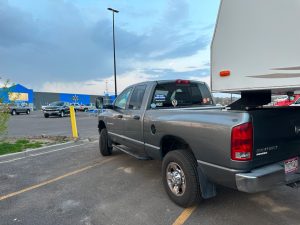
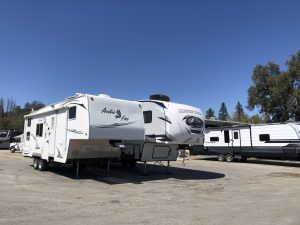
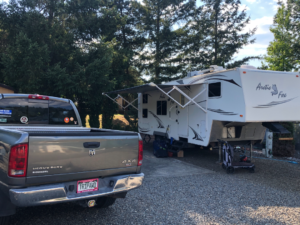
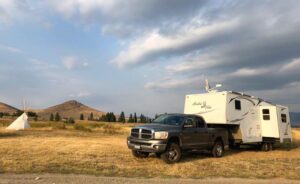
This is my first post dedicated to long-term costs of towing our 2007 24′ Arctic Fox fifth wheel trailer with our 2006 Dodge Ram 2500 diesel 4×4 SLT quad cab.

Why We Chose This Combination

  • You only deal with repairs on one engine
  • The cost: we didn’t have to mortgage it.
  • The Dodge Cummins diesel engine is the best EVER.
  • Arctic Fox trailers are renowned for quality (there are exceptions, of course)

Dodge Pickup Cost of Ownership Revealed

With that being said, the Dodge pickup isn’t exactly known for a low cost of ownership. Edmunds says our 2006 model should be expected to cost about $56,561 over five years to own (including everything from taxes to repairs), while our dream truck, a 2011 Dodge with a built-in exhaust brake will cost $65,159 over five years.

So, how accurate are their numbers?

According to my records, we’ve spent a grand total of $29,513 on our Dodge since we bought it with about 24,000 miles on the engine in April, 2007. For numerically challenged people like myself, that’s $7,378 a year.

This figure includes everything including fuel, registration, insurance and repairs. Buying used probably helped reduce Edmond’s figure, assuming they include the hefty licensing and registration fees that accompany buying a new vehicle.

That makes me feel good! Especially considering the kind of wear and tear we put on the truck by hauling the house around. As our odometer hits 100,000 miles in the next season and our Cummins engine warranty expires, let’s hope we can keep this low cost of ownership up!

Arctic Fox Cost of Ownership Revealed

Here are our facts and figures for our Arctic Fox 24-5N fifth wheel.

Since we purchased it in 2007, we’ve spent $8,662 on everything from trailer brake repairs to solar upgrades to general maintenance.

That’s $2,156 a year.

RVers are left by the wayside when it comes to the real cost of ownership.

There are no sites like Edmunds (that I know of) which show RVers what to expect over the long haul for their make and model.

Maybe this is because RVs come with so many options and variables, some with more duct tape, some with less, some get hauled up, down and around the country, some hardly move at all.

This RV.net article is one of the best I’ve found when it comes to analyzing RV ownership facts and figures over a year, but it still doesn’t consider long-term variables.

One thing RVs all have in common is their rapid depreciation rate, which, like a car, is all the more reason to buy a slightly used model.

I confess that we didn’t buy a used trailer: at the time of our purchase, we weren’t living the debt-free lifestyle, and neither one of us had ever owned any brand new vehicles. We felt that a brand new trailer was our reward for knocking ourselves out over our business for the last decade. Even though debt-free guru Dave Ramsey would think we were morons for buying new, we both still agree that we made a good choice. I’m certain we wouldn’t do it again, however.

Our Choice Still Works for Us

Owning a RV isn’t cheap for anyone, but it’s the overall lifestyle itself that costs less than when you live in a stick house. Some RVs like ours are cheaper to own than others but they all have necessary repairs, which although they shouldn’t be a surprise, are always painful and happen when you least expect them to.

Most of our road ripping friends have gone through at least two different RVs since they started, but we still love our house on wheels.

The main reason for staying with what we have is also about money; getting into anything newer would require financing, which we just won’t do.

Our fifth wheel – truck combo has worked well for us and and while I would love to feel like a rock star in a Prevost or a Foretravel, I know I wouldn’t love the cost of paying for a single tire on one of those beasts, unless I could pay for every single related item in cash.

That ain’t gonna happen today, but hey, that’s the goal!

Comments 3 Comments »

And we’re off!

We hit the road last weekend, and are now boondocking at the Slabs, in nearly the same spot we were in last year.

The frantic pace of L.A. is behind us and the roaring din of freeways is gone. In fact, the loudest noises we hear at any given time are packs of dogs barking, music playing, and occasionally the “thwap! thwap! thwap! thwap!” of mid-afternoon V-22 Osprey training drills on the adjacent Navy bombing range.

As we drove to the desert, I couldn’t help but be horrified at the cost of diesel, as high as $3.89 a gallon. Just as I started to panic when thinking about the triple-digit fuel-ups we’re in for, I got an email from Flying J, to let me know about their new Frequent Fueler Advantage Program.

As Flying J / Pilot Travel Center’s newest loyalty program, the Frequent Fueler Advantage Program gives members:

  • Instant fuel discounts at the pump on diesel, gas, and propane
    • $0.03 off diesel (currently available at RV and auto diesel lanes only (coming soon to truck diesel lanes)
    • $0.02 off gas
    • $0.10 off propane
  • $5 off dumping fees
  • Members-only offers for anyone who takes time to register their card:
    • Unlimited fuel discounts (no max gallons)
    • Pump Start*
    • Other benefits like the Coffee Club, buy 5 hot beverages and the 6th is on us!

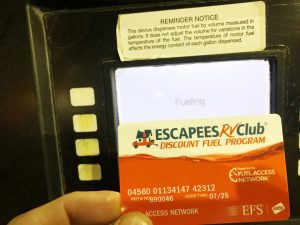
What got me interested in signing up with the program is the “Pump Start” benefit. This perk enables RVers to start the fuel pump instantly, just by swiping the registered loyalty card.

For passengers like me, this means that I don’t have to interrupt my knitting, just to go inside and pay whenever we stop for fuel.

If you already have a Flying J or Pilot loyalty card, like the Driver Payback Card or Frequent Fueler Card, you don’t need a new card, you can keep using them. But just be sure to go online to register your existing card so you can get all of the benefits of the new Frequent Fueler Advantage Program(you can also have the station clerk do it).

YouTube Preview Image

Comments 9 Comments »

Jim Replaces Dodge Ram 2500 4WD Cummins AlternatorRene mentioned in this post a while back – quite a while back, now – that I would eventually write about what happened to our truck, “stranding us” on the mountain.

Well, we didn’t exactly have to resort to cannibalism, which is  a good thing considering Wyatt is already missing one leg, but I digress…

Now that I’ve finally produced the silly little DIY video below describing how to replace the alternator on our Dodge Ram 2500, that time has come. But let’s take a step back, with the hope of actually making this post helpful for someone.

Symptoms of an Alternator Gone Bad

After putting more than 50,000 miles on our 2006 Dodge Ram 2500 pickup truck, we experienced our first major mechanical issue. With a little deductive reasoning, and the right tools, it turned out to be not that major at all.

How to Find Dodge Ram 2500 Cummins Diesel Serpentine Belt Tensioner Pulley LocationWe never once noticed the voltage gauge acting abnormally. Well, at least I didn’t. And we never noticed the truck having a hard time starting. Again, I didn’t. Until of course, the morning we needed to be somewhere and  were heading out in a hurry at the crack of dawn.

The first indicator of our bad alternator was a dead battery, or batteries in our case. Upon turning the key, the engine attempted to turn over and abruptly ground to a halt. Determined to make it to Wyatt’s class, I quickly disconnected one of the batteries from our fifth wheel and was able to jump start the truck.

Second indicator of an alternator gone bad: it got really hot! As we drove off, I realized that extra battery might come in handy. When I returned to the truck with it, I noticed a burning smell – one of those acrid, electrical burning smells. Acknowledging that it was unwise to drive anywhere – let alone more than an hour on Rocky Mountain backroads – we agreed to stay home and figure out what to do about the truck. Rene parked and I popped the hood. She quickly confirmed the distinct smell, and I touched the alternator. My melted fingerprints have since grown back, thank you.

Dodge Ram 2500 Cummins Diesel Serpentine Belt Tensioner Pulley Location

How To Identify the Serpentine Belt Tensioner Pulley

After a quick consult with el Jefe – Rene’s dad and my mechanical guru – we confirmed the alternator was shot. We also confirmed it was a bad idea to drive the hour to town. If the alternator seized up we could have thrown the serpentine belt and risked much greater damage. Raul told me, “you don’t need help, you just need a boost of confidence.” And that’s exactly what he gave me.

How to Identify Dodge Ram 2500 Cummins Diesel Serpentine Belt Tensioner Pulley LocationMy biggest challenge was identifying the Cummins diesel engine serpentine belt tensioner pulley. Once I found that, I knew I could do the job. This pulley allows you to relieve the tension from the belt, allowing you to remove it from the alternator.

With that done, swapping out the alternator is just a matter of pulling a few bolts.

The serpentine belt tensioner pulley (7) is located directly below the alternator pulley (8) on the Cummins Diesel engine in our 2006 Dodge Ram 2500. It has a square hole in the front into which a half inch socket wrench handle will fit. I was looking for something to loosen, but the pulley is spring loaded – simply pulling down on it releases the tension off the belt.

Tips for How To Replace Dodge Ram 2500 Alternator by Yourself

If you have someone help you, replacing the alternator on a 2006 Dodge Ram 2500 with the Cummins diesel engine might even be easier. This job, however, really couldn’t get much easier. Here’s how I did it alone:

  1. Serpentine Belt Tensioner Pulley Tip for Replacing Dodge Ram AlternatorDisconnect both batteries to avoid any risk of electrical shock
  2. Relieve tension from serpentine belt by inserting half inch socket wrench handle into the front of the tensioner pulley and pulling down.
  3. Secure wrench handle to fan shroud using vise grips (zip ties might work for holding the handle in place,or have someone hold it).*
  4. Remove belt from alternator pulley
  5. Remove wires from back of alternator.
  6. Remove the two long mounting bolts that hold the alternator in place.
  7. Replace old alternator with new one and tighten mounting bolts.
  8. Attach wires to alternator.
  9. Place belt back onto alternator pulley
  10. Reapply tension to belt and don’t forget to remove the socket wrench (and vice grips if using them).
  11. Reattach battery cables.

*Another option might be to just slip the belt off one of the bottom accessible pulleys to relieve tension, but i read about people having a hard time re-routing the belt correctly, since no handy diagram – like the one above – is to be found under the hood..

YouTube Preview Image

That’s it! If the batteries are dead, jump start the vehicle and allow the batteries to charge for at least ten minutes. We didn’t need  a jump. The truck fired right up when I was done, which is  surprising considering how things went for us when we needed to leave at the crack of dawn again the following weekend…

Troubleshooting Dead Batteries with New Alternator

Proud of the job I had done, I was determined to ensure I had done it right. After taking a long test drive, I started the truck periodically for a few days. Feeling confident all was well, we let it sit idle for a few more. Imagine our surprise when the truck wouldn’t crank the following weekend.

We rarely see many cars on our dirt road, especially before dawn. But just as I began shaking my head, Rene flagged down some poor fisherman heading to the lake. I say “poor” because Rene insisted they try to push our four tons of truck back out to the road, uphill. As soon as I released the brake, I nearly ran them over.

Even more perplexing than how on earth she thought these guys could budge the truck, was why their running car would not start our engine when I had jumped it off our trailer battery a week before. Rene describes in detail how the Purcells saved us with their F350, but she neglected to mention one important tip. When jump starting a heavy duty truck, use another heavy duty truck, and connect both sets of batteries!

So what happened? After having the shop investigate further, we discovered the batteries had been cooked. I successfully replaced the alternator, but the batteries were clearly already shot. The bad alternator apparently over-charged them, most likely due to a faulty voltage regulator.

On the Road Again

So while I did save us a couple hundred bucks by replacing the alternator myself, we are still out a few more after replacing the batteries. But with two new batteries and a new alternator, we are now ready to hit the road. A good thing considering the snow is starting to fall here on Jerry’s Acres.

Comments 8 Comments »

For the last few mornings, snow has been blanketing the mountainside but melting off by noon. This is nature’s not-so-subtle warning that one day very soon, we’ll wake up with four feet of the white stuff and have to dig our way out of here. Before that happens, we’ve been making progress getting the rig loaded, checking off lists and eating through our gigantic freezer.

Recently I got into a discussion with a friend about whether or not it was cheaper to stay home or hit the road.

I believe being on the road is cheaper.  How about you?

If you know what you’re doing, it’s possible to live more cheaply in an RV than a stick house (provided that you don’t have mortgage or rent to cover).

Being the meticulous bookeeper that I am, I track all of our expenses in Quickbooks. Here’s a general breakdown of what we spent four months at a time on the road, and here at Jerry’s Acres.

January 2010 to April 2010 (on the road)

Booze & Entertainment: $364

Food & Dining Out: $1798

Health & Beauty: $19

Campgrounds: $537

Pet Expenses: $624

Home Repair: $115

Truck Repair: $39

Utilities: $217

Fuel: $1090

TOTAL: $4,803 ($1,201 per month avg cost)


May 2010 to September 2010 (at Jerry’s Acres)

Booze & Entertainment: $400

Food & Dining Out: $2915

Health & Beauty: $138

Pet Expenses: $987

Home Repair $506

Truck Repair: $556

Utilities: $590

Fuel: $1563

TOTAL: $7,655 ($1,913 per month avg cost).

This excludes business expenses, one-time building upgrades, and static monthly costs like taxes, insurance and club dues. These costs are for two people and one dog.

But yes, living in a stick house is indeed more expensive! Even up here on a remote mountaintop, we find things to indulge in. We eat way more high end good eats when we have a full-sized refrigerator to stock, and a large kitchen to make a mess in. Also, driving the one hour each way to town isn’t cheap either, which is why we only do it twice a week to take Wyatt to his lessons and stock up.

My own tips for living cheaply on the road include:

  1. Invest in a good solar setup. Doing so will save hundreds by allowing you to boondock in free places.
  2. Never pay full price for a campground. Passport America and Escapees are the only two discount camping clubs worth the cost. Passport’s 50 percent discount will pay for itself the first time you use it and Escapees 10 percent savings will pay for itself after a few nights. If you’re too cheap to do that, good sites like FreeCampgrounds.com, RVParking.com and FreeCampsites.net are good sites to search.
  3. Buy the $10 Escapees Day’s End Directory. This guide to free and cheap boondocking spots all over the country will save you tons of money.
  4. Diesel rigs are the way to go. While diesel may not always be the cheapest fuel, the mileage you get out of a tank will be better than with a gas engine. And their power kicks butt on the highway!
  5. Stay away from popular places and touristy areas. You’ll pay three times what you would normally pay for a comparable campground outside the entertainment zone. There’s so much more to see outside of these crowded areas.
  6. Eat in! It’s tempting to try every new eatery in every town you go through, but save those for special occasions.

We’ll have more tips for you as we head out for our fourth winter on the road. Until then, stay warm and be sure to point your rig west…we’ll see you in the desert!

Comments 21 Comments »

Here’s a long overdue shout out to the fine folks at EagleSat. This small family-owned business in Longmont, CO serviced our MotoSat satellite internet system the last time we had problems. Which was apparently not the last time.

EagleSat Repairs MotoSat F2 Satellite Dish on Artic Fox Fifth WheelAt the time we had trouble locking on to our Satellite, with frequent motor stall errors. My usual multiple calls to MotoSat for support, and their routine responses about upgrading firmware, resulted in determination that a shop repair was necessary.

We weren’t about to return to Salt Lake City again, and pickings were slim for mobile internet experts in Wellington, CO. Our choices were an upholstery shop that sold MotoSat systems in nearby Fort Collins, or driving a couple hours to EagleSat. We opted for the latter and were glad we did.

One phone call to Frank, and we had an appointment scheduled and parts on the way. The next week we spent a day with he and his son Adam working on our rig, and we were home before dark. They cleaned up our entire system, replaced all the motors, and yes, even upgraded the D3 firmware.

So here we sit now, waiting for another elevation motor set to arrive. As soon as we set up here on the slabs, the dish wouldn’t budge. After troubleshooting all I could, the first person I called was Adam. He was polite, generous with his time, and helped me determine that both our elevation motor was shot, and I could do the repair myself. All I had to do was call MotoSat for the part. Oh that, and find an address for shipping.

Slab City Community SignSolar Mike was kind enough to let us ship our parts to him. I’d be on the roof reassembling everything right now if MotoSat hadn’t left a message saying the part is on back order and it may ship out next week. At least they were kind enough to call and let me know! In fact, Matt was the nicest tech I’ve dealt with at MotoSat in a long time. Maybe he hasn’t been there long enough to develop the characteristic arrogance and impatience I have encountered in the past.

But there I go digressing once again. It’s just a good thing we now have our MiFi for internet service redundancy! I could think of worse places than Slab City, USA to be waiting on parts. Ones that cost money for instance. But if I run into any challenges putting our F2 mount back together, I know who I’ll be calling …

EagleSat is a satellite communications company specializing in remote site connectivity and network interoperability. They offer premium mobile satellite solutions for commercial use and the recreational consumer (Motor Coaches and RV’s). EagleSat offers a full-line of mobile satellite systems for Internet access (voice and data) and/or television reception. And they know their stuff – there is a reason they service MotoSat systems, but not sell them!

Comments 11 Comments »

Our rig has been parked on the streets of L.A. for the last few weeks, while we catch up on the chisme with family and friends. Life here is as hectic and noisy as it gets, and every day Jim and I are reminded of why we chose to leave urban living behind.

We started 2009 with one goal; find Jerry’s Acres. Seven months into it, we did. Our Colorado retreat now sits underneath several feet of snow, waiting for our return.

With that behind us, we’re getting the other big part of our life in order, namely, making a real income again.

Our defnition of “real income” is different from most people’s. While we would love to be able to spend money on the finer things in life (like picking up a $20 bottle of wine instead of our old standard, Two Buck Chuck), we also aren’t willing to surrender our freedom in order to do so. My very short gig at Satan’s Castle was a good reminder about that.

People wonder, what do we do. How do we make any money? Well, we don’t do any one particular thing anymore. We don’t want to have one business again. And we don’t want to rely on one job to bring in money. We believe that putting all of your eggs in one basket is risky business, much moreso than varying your skills and finding multiple ways to generate income.

For us now, tiny bits of money trickle in from various web-based outlets that utilize our technical, design and writing skills. In 2010, we’ll work on building up our income revenue streams in these areas.

The money is iffy, the hours are long and uncertainty always looms over our heads, but we are much happier than we ever were in our previous lives. While we are still officially in the red and dipping into savings, I know that 2010 will be the year we are back in black, finally. It would be great if we could actually contribute to our retirement accounts once more. When that happens, I’ll know that we’ve truly been successful these last two and a half years.

On that note, I’ll say “Adios!” to 2009, and give 2010 a great big welcome. May this year bring the prosperity, joy and peace that we all need more of in our lives.

And many thanks to all of you for being a part of our world. Life would be pretty boring without you!

Comments 12 Comments »

Regular readers may remember that Jim and I aren’t exactly big gearheads. With our frugal lifestyle and relatively non-existent income right now, we must carefully choose the gear we need, to get the most out of our budget. And we understand that there’s a difference between being cheap, and being frugal. Buying cheap gear is always more expensive in the long run.

Take for example, this North Face jacket I’m wearing during our stay at Black Canyon of the Gunnison National Park in Colorado. The jacket has served me well for the last 8 years, but lately I’ve been thinking that it’s time for a replacement. This one was cutting edge at the time, but by today’s standard it’s bulky, heavy, and army green isn’t exactly the most flattering color. It’s also overkill for our winter travel adventures in the temperate southwest and should probably be left at our Colorado home base.

Coincidentally, I was introduced to The North Face Resolve jacket today, through Webtogs, an online retailer specializing in quality outdoor gear.

The North Face Resolve jacket features include:

  • seam sealed, waterproof, breathable fabric
  • soft, lined collar
  • stow-away hood
  • mesh-knit liner
  • storm baffle front zipper with double front closure
  • big pockets on both sides
  • athletic cut with a drawstring cord for tailored fit

As you might be able to see in the photo, I’m a walking billboard for North Face gear. My boots and jacket are North Face and so are the base layers I wear. Their products last forever and hold up beautifully, making them a frugal RVer’s dream.

The North Face Resolve jacket looks compact enough to fit in our tiny RV wardrobe closet, yet sturdy enough to give me the protection I need from the spring rains in Texas.

With Christmas around the corner, I think it’s time for an upgrade, don’t you?

Comments 2 Comments »

LinkWithin Related Stories Widget for Blogs


Banner