Posts Tagged “money”
If you’re a fulltime RVer or just thinking about it, be sure to visit Work for RVers and Campers, one of the premiere websites for RVers to visit when looking for ideas about how to make a living on the road.
Work for RVers and Campers is for RVers who want to earn money to support a traveling lifestyle. You’ll find free paid employment and volunteer workamper positions along with work-at-home business tips for travelers. Coleen’s newsletter also has inspirational tips and workamping ideas.
We found this resource during our early days of researching the road tripping lifestyle and we continue to pop in whenever we’re looking for new ways to generate income. Now, we’re thrilled to be featured on the Worker’s Profiles page!
Coleen and Bob are a real source of inspiration to us and if you’re thinking about this lifestyle, their story will inspire you too. They’re one of the web’s most well-known experts on making a living from the road. After all, they know a lot; they’ve been fulltiming since 1992! Here’s a little bit about this inspirational couple:
Bob and I spent over a decade living in a recreational vehicle of some kind or another. They included several travel trailers, a pickup camper, a park model trailer, and a motorhome. Along the way, we worked and supported ourselves. We are proof that it is not only possible, but practical, to earn a living while full-time RVing.
Much of what I write is based on our experience. Some of it comes from corresponding with thousands of campers and RVers. I also share what I’ve gleaned from employers and managers who hire and work with work campers and other RV workers.
If you’re dreaming of the fulltime RVing lifestyle or actively looking for work, we can’t recommend Work for RVers and Campers’s Resources enough. Visit today!
No Comments »
Our wheels have been rolling much faster than we’re used to.
In less than two weeks we went through Nebraska, Kansas, Missouri and Arkansas and didn’t see much other than a few small farm towns and more conservative Christian billboards than people.
Our rig is now parked at Hill Shade RV Park in Gonzales, Texas where we’ll be here workamping until mid-December. More about that later . . . but now:
The Road to Amazon is Now Paved with Gold?
This time of year always brings me back to my not-so-glorious days of working as a seasonal workamper at Amazon.com’s Fernley, Nevada warehhouse.
In fact, I keep receiving automated calls from the mis-named “Integrity” Personnel staffing agency that finds Amazon’s temporary workers in Nevada. The messages hype the lucrative pay and rewards that never materialized when I was there.
Funny thing is . . . maybe they’re telling the truth this time!
New Times at Amazon
Recently I bumped into Amazon’s main workamper hiring representative, the “Camper Force Coordinator” who attends RV shows and gatherings like the Workamper Rendezvous, touting the benefits of working at Amazon and hiring people on the spot.
This man isn’t a stranger to working the lowest rungs on the ladder at Amazon. He’s a retired firefighter who toiled at Amazon’s Kansas location before being hired as a seasonal recruiter when Amazon started managing the workamping program directly instead of relying on staffing agencies to do so. This recruiter is so nice that I hesitated to tell him about my crappy Fernley experience.
However I didn’t need to be shy: he knew all about the lousy way that the Nevada staffing agency managed seasonal workers like me, and he’s been working with Amazon to make every location a better place for workampers.
So it wasn’t just me! I wasn’t crazy for thinking that the agency treated everyone like dog-doo. I LOVE being vindicated!
The Camper Force Recruiter told me “I want to make sure that seasonal campers have a good experience and want to come back and tell their friends about it.”
Now that Amazon oversees temporary workampers, the benefits are greater than ever. Everyone gets a completion bonus, all campground fees are covered (they weren’t in Nevada), the pay is higher and every worker gets a 10 percent discount on Amazon purchases!
Amazon is also better managing the amount of workers they hire so that the promised overtime that never materialized for me is now occurring for workers at each warehouse. We talked to one Amazon elf this week who is already getting overtime in Nevada.
The Camper Force Coordinator made being a minion sound so appealing, he almost swayed me into applying. If I didn’t have other business ventures happening right now, I might’ve done it.
But then again, who am I kidding?
All Aboard the S.S. Independence!
The most valuable aspect of working as a minion was reacquainting myself with punching a clock.
I had forgotten what it was like to be told how to do my work and even when I could have lunch. Call it a bad attitude or whatever, but that’s just not my style.
As bad as it was working at Amazon’s Fernley location in 2009, I wouldn’t trade that experience for anything.
Why? Because it reminded me that . . .
I’d rather be the captain of my own dingy than a junior officer on the Titanic! (Dr. James Chan)
If you’re working at Amazon this season, what’s your experience like so far?
13 Comments »
Do you road trip with debt? If so, does debt interfere with your ability to enjoy your nomadic freedom?
Roadtripping with debt didn’t seem like a problem to us in 2007. After all, this lifestyle was only supposed to last a year. After that, we were supposed to settle down and get back into the “normal” routine of a mortgage and living beyond our means with the miracle of plastic.
We didn’t know that being normal was dumb.
But when we discovered that we we loved the nomadic lifestyle too much to stop, we knew we had to scale back our spending to keep going.
We still had no idea where our income would be coming from, but our original road trip budget could last another year if we got out of debt. Meeting real life examples of debt free road trippers also helped.
Old Habits are Hard to Break
In 2008, we painstakingly cracked open our nest egg and paid off our last debt, the rig. But old habits are hard to break, and we kept using credit cards.
There’s something about the security of using a plastic when you don’t know how much money you’ll make each month.
Physically we were debt-free, but mentally we were still enslaved by the credit card security blanket. We paid off the balance each month but I would sweat as I scrambled to find the funds.
But I Pay My Balance Every Month!
St udies show that when you use plastic to shop, you’re automatically spending more than you would if you paid in cash. But somehow I thought I was different, and poo-pooed those studies thinking “Oh not me! I’m always careful.”
But after some agonizing credit card billing hassles with Bank of World Domination earlier this year, we burned the security blanket and committed to paying cash for everything.
Because we have the most sporadic, unpredictable income, suddenly every purchase we made was under scrutiny. Knowing that we could suffer the embarrassing fate of being declined at the checkout counter gives us a self-discipline like we never had before. It was scary as hell the first two months, but now it feels “normal” to us.
The Results
Since we stopped using credit cards, I can’t say that our expenses have gone down a whole lot (after all, we were pretty frugal to begin with), but the peace of mind I find in knowing that everything in our possession, everything we eat or consume, is paid for on the spot.
Next week we’ll hit the road, completely, truly debt-free for the first time ever. I can’t wait!
Disclaimer: I’ll confess that we still use one piece of plastic to handle some aspects of our business. The efficiency and protection our card company offers when dealing with vendors, product returns and exchanges and other things that make our businesses run can’t compare with the lame customer service we get from our bank. I know Dave Ramsey would disagree, but since we don’t use the business card for normal everyday spending, I’m OK with it.
We still pay our balance every month, but until our business ventures stabilize our income to a level where I feel comfortable dealing with vendors in cash, we’ll continue wearing the credit card security blanket for the business.
And now with our new business venture, that shouldn’t last too much longer!
Recommended Reading:

Debt Free For Life: The Finish Rich Plan for Financial Freedom, by David Bach

Don’t Own, Don’t Rent, Live Well: How to be Debt Free, Build Your Nest Egg & Live Life on Your Own Terms, by Matthew & Fiona Peters
10 Comments »
And now a little about the “work” aspect of our road tripping lifestyle.
Over a year ago I committed to finally making good use of my overpriced journalism degree by building my writing career and expanding my editorial capabilities beyond the world of three legged dogs and bone cancer.
Although I was a regular contributor to the Eureka Times Standard Newspaper for about a decade (the main newspaper of our old stomping grounds) and wrote daily articles for our Tripawds.com community, I never seemed to have time to pursue actual paid writing gigs from new clients.
Faced with the reality that my current writing efforts weren’t going anywhere or generating income unless I made an honest attempt to pitch my services, I started looking for outlets that could improve my talents while actually paying something.
My efforts are slowly paying off. Here’s my latest piece about the beautiful area we fell in love with back in 2009:
“Red Feather Lakes: Northern Colorado’s Best Kept Secret.”
I wrote this for Go Colorado, a fantastic website about the gems that make the Centennial State our ideal place to homestead during summer.
Enjoy!
No Comments »
Posted by Rene in RV Tech, Spending Money, Work, tags: Arctic Fox, Dodge Ram 2500, expenses, fulltiming, lifestyle, money, RV lifestyle, spending
When it comes to your RV’s cost of ownership, is it what you expected?
Many RVers freely share worksheets showing what it costs to live on the road, but the elephant in the room is the long term costs of maintaining your RV and support vehicle.
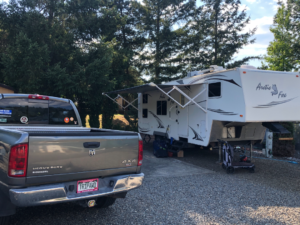
This is my first post dedicated to long-term costs of towing our 2007 24′ Arctic Fox fifth wheel trailer with our 2006 Dodge Ram 2500 diesel 4×4 SLT quad cab.
Why We Chose This Combination
- You only deal with repairs on one engine
- The cost: we didn’t have to mortgage it.
- The Dodge Cummins diesel engine is the best EVER.
- Arctic Fox trailers are renowned for quality (there are exceptions, of course)
Dodge Pickup Cost of Ownership Revealed
With that being said, the Dodge pickup isn’t exactly known for a low cost of ownership. Edmunds says our 2006 model should be expected to cost about $56,561 over five years to own (including everything from taxes to repairs), while our dream truck, a 2011 Dodge with a built-in exhaust brake will cost $65,159 over five years.
So, how accurate are their numbers?
According to my records, we’ve spent a grand total of $29,513 on our Dodge since we bought it with about 24,000 miles on the engine in April, 2007. For numerically challenged people like myself, that’s $7,378 a year.
This figure includes everything including fuel, registration, insurance and repairs. Buying used probably helped reduce Edmond’s figure, assuming they include the hefty licensing and registration fees that accompany buying a new vehicle.
That makes me feel good! Especially considering the kind of wear and tear we put on the truck by hauling the house around. As our odometer hits 100,000 miles in the next season and our Cummins engine warranty expires, let’s hope we can keep this low cost of ownership up!
Arctic Fox Cost of Ownership Revealed
Here are our facts and figures for our Arctic Fox 24-5N fifth wheel.
Since we purchased it in 2007, we’ve spent $8,662 on everything from trailer brake repairs to solar upgrades to general maintenance.
That’s $2,156 a year.
RVers are left by the wayside when it comes to the real cost of ownership.
There are no sites like Edmunds (that I know of) which show RVers what to expect over the long haul for their make and model.
Maybe this is because RVs come with so many options and variables, some with more duct tape, some with less, some get hauled up, down and around the country, some hardly move at all.
This RV.net article is one of the best I’ve found when it comes to analyzing RV ownership facts and figures over a year, but it still doesn’t consider long-term variables.
One thing RVs all have in common is their rapid depreciation rate, which, like a car, is all the more reason to buy a slightly used model.
I confess that we didn’t buy a used trailer: at the time of our purchase, we weren’t living the debt-free lifestyle, and neither one of us had ever owned any brand new vehicles. We felt that a brand new trailer was our reward for knocking ourselves out over our business for the last decade. Even though debt-free guru Dave Ramsey would think we were morons for buying new, we both still agree that we made a good choice. I’m certain we wouldn’t do it again, however.
Our Choice Still Works for Us
Owning a RV isn’t cheap for anyone, but it’s the overall lifestyle itself that costs less than when you live in a stick house. Some RVs like ours are cheaper to own than others but they all have necessary repairs, which although they shouldn’t be a surprise, are always painful and happen when you least expect them to.
Most of our road ripping friends have gone through at least two different RVs since they started, but we still love our house on wheels.
The main reason for staying with what we have is also about money; getting into anything newer would require financing, which we just won’t do.
Our fifth wheel – truck combo has worked well for us and and while I would love to feel like a rock star in a Prevost or a Foretravel, I know I wouldn’t love the cost of paying for a single tire on one of those beasts, unless I could pay for every single related item in cash.
That ain’t gonna happen today, but hey, that’s the goal!
3 Comments »
Warning: California’s fuel prices may be hazardous to your health.
We’ve seen diesel as high as $4.87 a gallon in Southern California and gas at $4.39 here in Humboldt County. Considering that we were expecting diesel to be over $5 in Humboldt, I suppose this was a relief in a sick sort of way.
Getting to Humboldt County was an epic journey, as usual.
Imagine yourself traveling over the Sierra Nevadas in a covered wagon, and you’ll have a good idea of how rough it can be to bring a RV here.
Although Humboldt’s five hours from anywhere, the hard road to get here is a small price to pay when you do lay your eyes on the land of giant redwoods and lush green forests filled with so many shades of green that you never knew existed.
Escaping the Fort Davis Fire: a Sign from the Universe?
The weird thing about being here for Chris’ memorial this week is that originally we were supposed to be in Fort Davis, Texas today, to check out the McDonald observatory we’ve always wanted to visit. Our plan was to go there and then on to Big Bend National Park.
But I just learned that Fort Davis is on fire, and so is the area between there and Marfa, another town we were supposed to visit afterward.
The biggest fire in Texas history is burning the very place we would have been in at this moment.
It’s good to know we didn’t get stuck in another Texas natural disaster.
I just keep thinking, if we hadn’t turned around and headed back up here for Chris’ memorial, what would have happened to us out there at Fort Davis?
What does this major change to the remainder of our winter snowbirding plans mean? Are we meant to go home early for some reason?
Who knows. All I know is that for every wrong turn we make on the road of life, there’s a right turn just ahead.
9 Comments »
This is a little something that former RVer Lisa Pucell told me about. Now, I’m telling you, because every RVer needs Skoy Cloths in their rig.
 When you live in a RV, regular kitchen wash cloths take forever to dry out. If you’re somewhere like the damp Pacific Northwest or humid Southern states, they’ll get stinky and mildew after just a day or two. And forget those bacteria-factories known as sponges, they’re just as gross.
Skoy Cloths, however are different. These fabulous little eco-friendly clean up towels are super absorbent and meant to replace any paper towels, rags or sponges around the house. They’re so good that
Using a Skoy Cloth is equivalent to using 15 rolls of paper towels in an average home.
These mighty little towels dry within minutes, even in the dampest climates.
This means that bacteria has no time to grow on them. If you suspect they’re getting icky, stick ‘em in the microwave. And when they get really dirty, you can throw them in the wash. They’ll last several months until you need to toss them. And when you do, you won’t clog up landfills either.
“Skoy Cloths are 100% biodegradable because it is made from a natural cotton and wood-based cellulose pulp. SKOY cloth is a chlorine-free product using water-based colors and inks. After an independent composting test, SKOY cloth broke down completely within 5 weeks.”
I use Skoy Cloths in the kitchen and bathroom, and can’t imagine life without them now. I also feel great about buying this product from a small, woman-owned business. Skoy Cloths are simply awesome.

7 Comments »
A NuRVers member recently posted this question in the Discussion Forums:
Hi all, I am hoping to be on the road by April. I am wondering what you “old timers” would do differently if you were just starting out?
While we don’t like to “should” all over ourselves, through the four years we’ve been on the road we’ve learned that there are some things we might have done differently when starting out.
1. Sign up for Passport America.
We hardly spend time or money at RV parks, but this club has saved our necks and our wallets several times. Nearly all camping membership clubs suck, but not Passport.
There are tons of participating RV parks, most without tight restrictions, and they cost half of what they normally would, some as little as $7 a night for full hookups!
Our first year out we spent far too much money paying full price for RV park stays. Now, I wouldn’t travel even halftime without a PA membership.
2. Join Escapees, become Texans and use their mail forwarding service.
It took us two years to figure out that the services you get from Escapees can’t be beat. Our first year out we had a family member do our mail for us (they volunteered). But it was a hassle for them, and we felt the weight of obligation after we knew this sabbatical was turning into a lifestyle.
We also would have saved a ton on our residency / vehicle fees had we turned Texan sooner.
3. Invest in a bigger solar system.
We started out knowing we would boondock, but we didn’t realize the extent of it, nor how much it could save us. Our system was adequate for a long-term vacation but not for making a living with.
We’ve slowly upgraded, but when we had the money four years ago we should’ve started out with a bigger system.
Boondocking gets us closer to our “real” camping roots as backpackers, by allowing us to get as far away from civilization as possible, without having to dig a craphole.
4. Travel without debt.

When we started out, we had not paid off our rig, even though we had the money in savings. I hated knowing that we had real bills to pay and no real income, but I didn’t want to see that pile go away.
Then we met a debt-free home-schoolin’ Christian family, and jumped on the Dave Ramsey bandwagon they riding. We paid off all of our debt and vowed to never take it on again.
For the first time in our lives, we truly felt the meaning of “freedom.” Living a with debt, much less fulltiming with a sporadic income and debt, is a big drag on happiness…at least to us it is.
That’s about all of the “should haves” we can think of. Remember, researching your road tripping lifestyle is key to long term success, and planning how you’ll be comfortable is critical. Don’t hit the road without doing either.
8 Comments »
Posted by Rene in Full-Timing Tips, Live, Spending Money, Work, tags: California Desert, expenses, Full-Timing Tips, lifestyle, money, road trip, RV lifestyle, Slab City, spending
And we’re off!
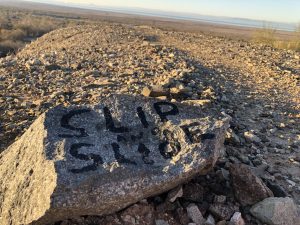
We hit the road last weekend, and are now boondocking at the Slabs, in nearly the same spot we were in last year.
The frantic pace of L.A. is behind us and the roaring din of freeways is gone. In fact, the loudest noises we hear at any given time are packs of dogs barking, music playing, and occasionally the “thwap! thwap! thwap! thwap!” of mid-afternoon V-22 Osprey training drills on the adjacent Navy bombing range.
As we drove to the desert, I couldn’t help but be horrified at the cost of diesel, as high as $3.89 a gallon. Just as I started to panic when thinking about the triple-digit fuel-ups we’re in for, I got an email from Flying J, to let me know about their new Frequent Fueler Advantage Program.
As Flying J / Pilot Travel Center’s newest loyalty program, the Frequent Fueler Advantage Program gives members:
- Instant fuel discounts at the pump on diesel, gas, and propane
- $0.03 off diesel (currently available at RV and auto diesel lanes only (coming soon to truck diesel lanes)
- $0.02 off gas
- $0.10 off propane
- $5 off dumping fees
- Members-only offers for anyone who takes time to register their card:
- Unlimited fuel discounts (no max gallons)
- Pump Start*
- Other benefits like the Coffee Club, buy 5 hot beverages and the 6th is on us!
What got me interested in signing up with the program is the “Pump Start” benefit. This perk enables RVers to start the fuel pump instantly, just by swiping the registered loyalty card.
For passengers like me, this means that I don’t have to interrupt my knitting, just to go inside and pay whenever we stop for fuel.
If you already have a Flying J or Pilot loyalty card, like the Driver Payback Card or Frequent Fueler Card, you don’t need a new card, you can keep using them. But just be sure to go online to register your existing card so you can get all of the benefits of the new Frequent Fueler Advantage Program(you can also have the station clerk do it).

9 Comments »
Posted by Rene in Full-Timing Tips, Live, tags: book review, Full-Timing Tips, lifestyle, money, road trip, RV lifestyle, RV road trip, sabbatical, travel
When you live the hobo lifestyle, many people will mistakenly assume that you’re either a trustafarian or you’ve won the lotto. We’ve had many people comment “oh you must be rich” when we tell them how we live.
Rich in spirit, mind, body and soul maybe, but financially, we are not (yet! hah!).
Most people don’t believe it, but you really don’t need to be rich to take an extended travel sabbatical and see the sights you’ve always wanted to see. All it takes is the determination to work out the details and finance the trip.
No More Excuses!
If you’re thinking of hitting the road but your finances, job, family, pet or health situation is keeping you from doing it, stop right now and pick up a copy of “Answers to the Common Excuses Not to Travel Full-Time.”
Our NuRVer friends Chris and Cherie recently published a useful 78-page e-book that addresses 15 different excuses that people make for not living the travel lifestyle they’ve always dreamed of. From figuring out how to get rid of your stuff, to planning for health care and making a living, “Answers to the Common Excuses” will motivate you to put your dream in motion.
Available on a pay-what-it’s-worth-to-you basis, just just follow this link to pick up your copy today!
3 Comments »
|