Posts Tagged “spending”

Do you road trip with debt? If so, does debt interfere with your ability to enjoy your nomadic freedom?

Roadtripping with debt didn’t seem like a problem to us in 2007. After all, this lifestyle was only supposed to last a year. After that, we were supposed to settle down and get back into the “normal” routine of a mortgage and living beyond our means with the miracle of plastic.

We didn’t know that being normal was dumb.

But when we discovered that we we loved the nomadic lifestyle too much to stop, we knew we had to scale back our spending to keep going.

We still had no idea where our income would be coming from, but our original road trip budget could last another year if we got out of debt. Meeting real life examples of debt free road trippers also helped.

Old Habits are Hard to Break

In 2008, we painstakingly cracked open our nest egg and paid off our last debt, the rig. But old habits are hard to break, and we kept using credit cards.

There’s something about the security of using a plastic when you don’t know how much money you’ll make each month.

Physically we were debt-free, but mentally we were still enslaved by the credit card security blanket. We paid off the balance each month but I would sweat as I scrambled to find the funds.

But I Pay My Balance Every Month!

Studies show that when you use plastic to shop, you’re automatically spending more than you would if you paid in cash. But somehow I thought I was different, and poo-pooed those studies thinking “Oh  not me! I’m always careful.

But after some agonizing credit card billing hassles with Bank of World Domination earlier this year, we burned the security blanket and committed to paying cash for everything.

Because we have the most sporadic, unpredictable income, suddenly every purchase we made was under scrutiny. Knowing that we could suffer the embarrassing fate of being declined at the checkout counter gives us a self-discipline like we never had before. It was scary as hell the first two months, but now it feels “normal” to us.

The Results

Since we stopped using credit cards, I can’t say that our expenses have gone down a whole lot (after all, we were pretty frugal to begin with), but the peace of mind I find in knowing that everything in our possession, everything we eat or consume, is paid for on the spot.

Next week we’ll hit the road, completely, truly debt-free for the first time ever. I can’t wait!

Disclaimer: I’ll confess that we still use one piece of plastic to handle some aspects of our business. The efficiency and protection our card company offers when dealing with vendors, product returns and exchanges and other things that make our businesses run can’t compare with the lame customer service we get from our bank. I know Dave Ramsey would disagree, but since we don’t use the business card for normal everyday spending, I’m OK with it.

We still pay our balance every month, but until our business ventures stabilize our income to a level where I feel comfortable dealing with vendors in cash, we’ll continue wearing the credit card security blanket for the business.

And now with our new business venture, that shouldn’t last too much longer!

Recommended Reading:


Debt Free For Life: The Finish Rich Plan for Financial Freedom, by David Bach


Don’t Own, Don’t Rent, Live Well: How to be Debt Free, Build Your Nest Egg & Live Life on Your Own Terms, by Matthew & Fiona Peters

Comments 10 Comments »

When it comes to your RV’s cost of ownership, is it what you expected?

Many RVers freely share worksheets showing what it costs to live on the road, but the elephant in the room is the long term costs of maintaining your RV and support vehicle.

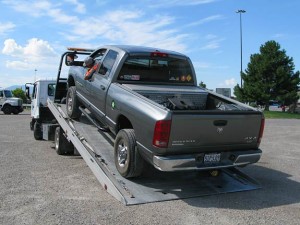
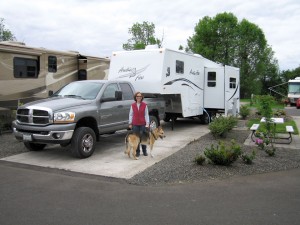
This is my first post dedicated to long-term costs of towing our 2007 24′ Arctic Fox fifth wheel trailer with our 2006 Dodge Ram 2500 diesel 4×4 SLT quad cab.

Why We Chose This Combination

  • You only deal with repairs on one engine
  • The cost: we didn’t have to mortgage it.
  • The Dodge Cummins diesel engine is the best EVER.
  • Arctic Fox trailers are renowned for quality (there are exceptions, of course)

Dodge Pickup Cost of Ownership Revealed

With that being said, the Dodge pickup isn’t exactly known for a low cost of ownership. Edmunds says our 2006 model should be expected to cost about $56,561 over five years to own (including everything from taxes to repairs), while our dream truck, a 2011 Dodge with a built-in exhaust brake will cost $65,159 over five years.

So, how accurate are their numbers?

According to my records, we’ve spent a grand total of $29,513 on our Dodge since we bought it with about 24,000 miles on the engine in April, 2007. For numerically challenged people like myself, that’s $7,378 a year.

This figure includes everything including fuel, registration, insurance and repairs. Buying used probably helped reduce Edmond’s figure, assuming they include the hefty licensing and registration fees that accompany buying a new vehicle.

That makes me feel good! Especially considering the kind of wear and tear we put on the truck by hauling the house around. As our odometer hits 100,000 miles in the next season and our Cummins engine warranty expires, let’s hope we can keep this low cost of ownership up!

Arctic Fox Cost of Ownership Revealed

Here are our facts and figures for our Arctic Fox 24-5N fifth wheel.

Since we purchased it in 2007, we’ve spent $8,662 on everything from trailer brake repairs to solar upgrades to general maintenance.

That’s $2,156 a year.

RVers are left by the wayside when it comes to the real cost of ownership.

There are no sites like Edmunds (that I know of) which show RVers what to expect over the long haul for their make and model.

Maybe this is because RVs come with so many options and variables, some with more duct tape, some with less, some get hauled up, down and around the country, some hardly move at all.

This RV.net article is one of the best I’ve found when it comes to analyzing RV ownership facts and figures over a year, but it still doesn’t consider long-term variables.

One thing RVs all have in common is their rapid depreciation rate, which, like a car, is all the more reason to buy a slightly used model.

I confess that we didn’t buy a used trailer: at the time of our purchase, we weren’t living the debt-free lifestyle, and neither one of us had ever owned any brand new vehicles. We felt that a brand new trailer was our reward for knocking ourselves out over our business for the last decade. Even though debt-free guru Dave Ramsey would think we were morons for buying new, we both still agree that we made a good choice. I’m certain we wouldn’t do it again, however.

Our Choice Still Works for Us

Owning a RV isn’t cheap for anyone, but it’s the overall lifestyle itself that costs less than when you live in a stick house. Some RVs like ours are cheaper to own than others but they all have necessary repairs, which although they shouldn’t be a surprise, are always painful and happen when you least expect them to.

Most of our road ripping friends have gone through at least two different RVs since they started, but we still love our house on wheels.

The main reason for staying with what we have is also about money; getting into anything newer would require financing, which we just won’t do.

Our fifth wheel – truck combo has worked well for us and and while I would love to feel like a rock star in a Prevost or a Foretravel, I know I wouldn’t love the cost of paying for a single tire on one of those beasts, unless I could pay for every single related item in cash.

That ain’t gonna happen today, but hey, that’s the goal!

Comments 3 Comments »

Summer is in full bloom here at 8,500 feet and we are loving it! But the other day, we had the talk.

“What do you want to do this winter?”

“Are we caretaking? Are we Slabbing? Renting a space with full hookups?”

Notice how workamping or getting a seasonal job didn’t come into the conversation.

We might consider caretaking if the right gig in Texas came along, but long ago we concluded after my last failed attempt to work for The Man that seasonal work was more emotional trauma than it was worth, and even the best  workamping job would take us away from that which we do best. So forget those ideas.

Winter 2011/2012: Now What?

The only thing we know for sure is that we don’t want to stay here as late as we did last year, when the snow was so deep we couldn’t find the trailer.

Originally we had grand plans of making another East Coast loop, but it looks like that idea’s getting shelved until our income is up and we can justify the expense.

East Coast RVing will drive low-budget snowbirds into the poorhouse.

For us, the West is the Best, and that is where we shall fly. Onward to the free boondocking lands of New Mexico, Arizona, California and then, finally, to our long-awaited return to all points east, west, south and north Texas (which isn’t all that cheap, but it sure is fun!).

So now our question is, What are YOU doing this winter?

Comments 13 Comments »

We used to despise everything about casinos; the stinky smoke, slot machine granny zombies, throwing money at games of chance, and because the house always wins.

I always wondered why fellow frugal road trippers Sean and Louise stay and dine at casinos around the country.

Other than the large parking lots that can accommodate their magic bus, why would they actually go inside, when, like us, they’re rarely willing to pay for campsites? What could possibly lure them in?

Last year when we saw Willie Nelson at Morongo Casino Resort and Spa in Southern California, we understood why. Casinos not only welcome RVers, but many reward us for sticking around.

Why Try Casino Camping?

  • Lots of casinos have dedicated RV parking
  • Multi-night stays are often fine
  • Unhitching is tolerated at many places
  • Parking lots are usually well-lit and patrolled by security
  • Most have restaurant discounts if you join their “Player’s Club”

We never thought we would surrender our IDs to a casino to join their stupid gambling discount club (did I tell you I hate gambling?).

But when we stopped at Morongo recently, we were hungry and didn’t feel like cooking. Eating out is a rare treat for us, but Morongo has several eateries including a good lookin’ buffet restaurant.

The normal price to eat-till-you-puke at Morongo’s buffet is $15. Join their Winner’s Club and  you can get one $10 voucher per person toward dining or gambling (guess what we chose), plus another $4 off your meal total each time you dine there. We ended up paying $6 for an all-you-can-eat orgy! Six bucks!

All casinos have some kind of discount club to keep the gambling junkies coming back for more. Although you’ll need to hand over your ID and allow them to cram your mailbox full of stupid promotions, you’re bound to get some free meals and overnight spots in return. It’s a win-win for everyone!

Casino Camping Tips

Always follow casino parking etiquette, which is similar to behaving at Wally World:

  • Ask security. Find the guy on patrol and ask if it’s OK to park there, where you should park and for how long.
  • No setting up camp. That means your generator stays off, your jacks remain up, your awning’s rolled in and your crap stays inside.
  • Keep it neater than you found it. Don’t dump your trash there, save it for the gas station that’s ripping you off at $4.50 a gallon.
  • Give them some of your cash. Gambling’s stupid in my book but it’s your choice. There are other ways to thank the casino, like dining inside or even just having a beer at the bar. Remember, join their Player’s Club to save tons!
  • And if you win big because you tried casino camping as a result of this post, send some our way!

I’ll never bash casinos again, we’re hooked on casino camping! From now on, if we have a choice between a WalMart or a casino with a restaurant, guess where you’ll find us?

Comments 13 Comments »

Warning: California’s fuel prices may be hazardous to your health.

We’ve seen diesel as high as $4.87 a gallon in Southern California and gas at $4.39 here in Humboldt County. Considering that we were expecting diesel to be over $5 in Humboldt, I suppose this was a relief in a sick sort of way.

Getting to Humboldt County was an epic journey, as usual.

Imagine yourself traveling over the Sierra Nevadas in a covered wagon, and you’ll have a good idea of how rough it can be to bring a RV here.

Although Humboldt’s five hours from anywhere, the hard road to get here is a small price to pay when you do lay your eyes on the land of giant redwoods and lush green forests filled with so many shades of green that you never knew existed.

Escaping the Fort Davis Fire: a Sign from the Universe?

The weird thing about being here for Chris’ memorial this week is that originally we were supposed to be in Fort Davis, Texas today, to check out the McDonald observatory we’ve always wanted to visit. Our plan was to go there and then on to Big Bend National Park.

But I just learned that Fort Davis is on fire, and so is the area between there and Marfa, another town we were supposed to visit afterward.

The biggest fire in Texas history is burning the very place we would have been in at this moment.

It’s good to know we didn’t get stuck in another Texas natural disaster.

I just keep thinking, if we hadn’t turned around and headed back up here for Chris’ memorial, what would have happened to us out there at Fort Davis?

What does this major change to the remainder of our winter snowbirding plans mean? Are we meant to go home early for some reason?

Who knows. All I know is that for every wrong turn we make on the road of life, there’s a right turn just ahead.

Comments 9 Comments »

Recently, we were thrilled to be the lucky winners of this Xantrex 400-watt Portable Solar Pack.

The pack was courtesy of RV Parking.com, the largest online directory of RV campgrounds and campsites on the web and the only one with a mobile app for your iPhone.

Stay tuned for an upcoming review of the solar pack, but meanwhile, we wanted to let you know about this fabulous new directory.

RV Parking: Over 19,000 Reviews to Date!

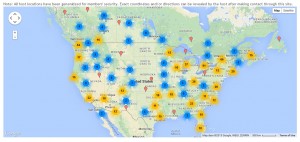
RV Parking is a new kid on the block, at just nine months old. But, this new site already features over 19,000 listings of North American RV parks and freebie spots.

The reviews tell you everything you could possibly want to know about a campsite or parking location and features photos, amenities and other information to help you decide where you want to spend your time.

RV Parking even has an iPhone app that will store your data locally so it’s still accessible even if you can’t get a signal.

There are other directories for RVers out there, and you’re probably wondering what makes RV Parking so special. With that in mind, we asked founder Erik Budde why he decided to undertake this huge project to catalog RV parks around the continent:

Besides your parents being RVers, what got you into creating the website?

“It just seemed to me that RVing was a little behind. I mean, the phone book died about 5 years ago, but still most all RVers are carrying around the equivalent and basing their decisions on an inch of text and maybe an ad. It just felt archaic.

I mean, before you drive 50 miles to camp somewhere, don’t you want to hear what other people think? Don’t you want to see some photos?

What makes RV Parking different from other campground review sites?

“So many of the main sources of information seemed inherently biased. Lots of websites might have info, but they are also taking money from the parks (one way or another) and not always being clear about it.” RV Parking takes no money from parks or campgrounds mentioned on the website.

Download RV Parking’s Mobile App Today

RV Parking is the only online directory with a a free iPhone campground directory app. Erik says he created the app because “no one had a mobile version of their web site (at least that I could find).”

RV Parking’s team wants to create all the tools (reviews, photos, directions, etc.) an RVer needs to find the right park, and to make these tools accessible on any device  from a laptop to a smart phone.

Expect to see more reviews and more photos on the site in the coming year. Erik wants to hear from as many RVers as possible who are willing to share both good and not-so-good park and boondocking experiences, so check out RV Parking to add your review.

Even though it’s still in its infancy, RV Parking’s content shows that Erik and his team have poured their hearts into this project. It’s the best online directory we’ve found to date, and we hope that you’ll visit this resource and add your two cents to campground reviews while you’re at it.

Check out RV Parking today!

Comments 3 Comments »

This is a little something that former RVer Lisa Pucell told me about. Now, I’m telling you, because every RVer needs Skoy Cloths in their rig.

When you live in a RV, regular kitchen wash cloths take forever to dry out. If you’re somewhere like the damp Pacific Northwest or humid Southern states, they’ll get stinky and mildew after just a day or two. And forget those bacteria-factories known as sponges, they’re just as gross.

Skoy Cloths, however are different. These fabulous little eco-friendly clean up towels are super absorbent and meant to replace any paper towels, rags or sponges around the house. They’re so good that

Using a Skoy Cloth is equivalent to using 15 rolls of paper towels in an average home.

These mighty little towels dry within minutes, even in the dampest climates.

This means that bacteria has no time to grow on them. If you suspect they’re getting icky, stick ‘em in the microwave. And when they get really dirty, you can throw them in the wash. They’ll last several months until you need to toss them. And when you do, you won’t clog up landfills either.

Skoy Cloths are 100% biodegradable because it is made from a natural cotton and wood-based cellulose pulp.  SKOY cloth is a chlorine-free product using water-based colors and inks.  After an independent composting test, SKOY cloth broke down completely within 5 weeks.”

I use Skoy Cloths in the kitchen and bathroom, and can’t imagine life without them now. I also feel great about buying this product from a small, woman-owned business. Skoy Cloths are simply awesome.

Comments 7 Comments »

And we’re off!

We hit the road last weekend, and are now boondocking at the Slabs, in nearly the same spot we were in last year.

The frantic pace of L.A. is behind us and the roaring din of freeways is gone. In fact, the loudest noises we hear at any given time are packs of dogs barking, music playing, and occasionally the “thwap! thwap! thwap! thwap!” of mid-afternoon V-22 Osprey training drills on the adjacent Navy bombing range.

As we drove to the desert, I couldn’t help but be horrified at the cost of diesel, as high as $3.89 a gallon. Just as I started to panic when thinking about the triple-digit fuel-ups we’re in for, I got an email from Flying J, to let me know about their new Frequent Fueler Advantage Program.

As Flying J / Pilot Travel Center’s newest loyalty program, the Frequent Fueler Advantage Program gives members:

  • Instant fuel discounts at the pump on diesel, gas, and propane
    • $0.03 off diesel (currently available at RV and auto diesel lanes only (coming soon to truck diesel lanes)
    • $0.02 off gas
    • $0.10 off propane
  • $5 off dumping fees
  • Members-only offers for anyone who takes time to register their card:
    • Unlimited fuel discounts (no max gallons)
    • Pump Start*
    • Other benefits like the Coffee Club, buy 5 hot beverages and the 6th is on us!

What got me interested in signing up with the program is the “Pump Start” benefit. This perk enables RVers to start the fuel pump instantly, just by swiping the registered loyalty card.

For passengers like me, this means that I don’t have to interrupt my knitting, just to go inside and pay whenever we stop for fuel.

If you already have a Flying J or Pilot loyalty card, like the Driver Payback Card or Frequent Fueler Card, you don’t need a new card, you can keep using them. But just be sure to go online to register your existing card so you can get all of the benefits of the new Frequent Fueler Advantage Program(you can also have the station clerk do it).

YouTube Preview Image

Comments 9 Comments »

For the last few mornings, snow has been blanketing the mountainside but melting off by noon. This is nature’s not-so-subtle warning that one day very soon, we’ll wake up with four feet of the white stuff and have to dig our way out of here. Before that happens, we’ve been making progress getting the rig loaded, checking off lists and eating through our gigantic freezer.

Recently I got into a discussion with a friend about whether or not it was cheaper to stay home or hit the road.

I believe being on the road is cheaper.  How about you?

If you know what you’re doing, it’s possible to live more cheaply in an RV than a stick house (provided that you don’t have mortgage or rent to cover).

Being the meticulous bookeeper that I am, I track all of our expenses in Quickbooks. Here’s a general breakdown of what we spent four months at a time on the road, and here at Jerry’s Acres.

January 2010 to April 2010 (on the road)

Booze & Entertainment: $364

Food & Dining Out: $1798

Health & Beauty: $19

Campgrounds: $537

Pet Expenses: $624

Home Repair: $115

Truck Repair: $39

Utilities: $217

Fuel: $1090

TOTAL: $4,803 ($1,201 per month avg cost)


May 2010 to September 2010 (at Jerry’s Acres)

Booze & Entertainment: $400

Food & Dining Out: $2915

Health & Beauty: $138

Pet Expenses: $987

Home Repair $506

Truck Repair: $556

Utilities: $590

Fuel: $1563

TOTAL: $7,655 ($1,913 per month avg cost).

This excludes business expenses, one-time building upgrades, and static monthly costs like taxes, insurance and club dues. These costs are for two people and one dog.

But yes, living in a stick house is indeed more expensive! Even up here on a remote mountaintop, we find things to indulge in. We eat way more high end good eats when we have a full-sized refrigerator to stock, and a large kitchen to make a mess in. Also, driving the one hour each way to town isn’t cheap either, which is why we only do it twice a week to take Wyatt to his lessons and stock up.

My own tips for living cheaply on the road include:

  1. Invest in a good solar setup. Doing so will save hundreds by allowing you to boondock in free places.
  2. Never pay full price for a campground. Passport America and Escapees are the only two discount camping clubs worth the cost. Passport’s 50 percent discount will pay for itself the first time you use it and Escapees 10 percent savings will pay for itself after a few nights. If you’re too cheap to do that, good sites like FreeCampgrounds.com, RVParking.com and FreeCampsites.net are good sites to search.
  3. Buy the $10 Escapees Day’s End Directory. This guide to free and cheap boondocking spots all over the country will save you tons of money.
  4. Diesel rigs are the way to go. While diesel may not always be the cheapest fuel, the mileage you get out of a tank will be better than with a gas engine. And their power kicks butt on the highway!
  5. Stay away from popular places and touristy areas. You’ll pay three times what you would normally pay for a comparable campground outside the entertainment zone. There’s so much more to see outside of these crowded areas.
  6. Eat in! It’s tempting to try every new eatery in every town you go through, but save those for special occasions.

We’ll have more tips for you as we head out for our fourth winter on the road. Until then, stay warm and be sure to point your rig west…we’ll see you in the desert!

Comments 21 Comments »

Once the weather finally warmed up here in the Southwest, time seemed to speed up as quickly as the fat grew around our waistlines from all of the good eats and tasty Shiner beer we’re consuming (we are in Texas after all!).

Our road trip adventures are happening faster than we can write about them, and as much as we don’t want this blog to be a “this-is-what-I-did-today” journal, for the sake of catching up, here’s a quick recap of a few of our favorite stops:

The Pepper Pot, Hatch New Mexico

Hatch is nothing more than a wide spot in the road, but it’s got a worldwide rep for being the green chile capital of the world. When we heard that Anthony Bourdain once said that he had the best red enchiladas of his life at the Pepper Pot, we had to find out if it was true.

Bourdain was right. The Pepper Pot’s menu was the finest of traditional New Mexican cuisine, and I’ve never had a better green or red sauce than theirs (with the exception of my Mom’s, of course!). The aromas and flavors were a smooth, smoky blend of New Mexico’s finest chilies, the staff was friendly, and this massive lunch was just $25 for the two of us.

The Texas Hill Country

There’s an unexpected beauty to the Hill Country region that’s drawn our rig back since 2008. This year the countryside was especially green and lush, with incredible spring flowers and overflowing creeks and rivers.

We love Texas so much that next time a pile of money falls from the sky, we’ll buy a small piece of Hill Country land to winter on. The food can’t be beat, the people are friendly and open, and most aren’t afraid to express their opinions. Texans tell it like they see it, which even when I don’t agree with it, I can appreciate.

Luckenbach

Still, we love Texas but we’re not sure if Texas loves us. Last year the trailer got stuck in the mud at Luckenbach. This year, a flash flood almost took our rig on the Guadalupe. After that near-death experience, once again, our truck almost drowned in the slippery, deep mud of the Luckenbach parking lot.

But it was totally worth it.

Come hell or high water, nothing was going to keep the good people of Luckenbach from holding the first annual Texas Hat Festival.

If anyone knows about hats, it’s Texans. The Luckenbach Hat Festival was all things hats, with a ton of incredible Texas bands, vendors, games and contests.

Like the ugly hat contest I entered. I didn’t win, but at least I can say I got my fifteen seconds of fame, on stage at Luckenbach. I also got a pretty nifty cowgirl hat for just twenty bucks, then ended up wining one later from an event sponsor!

Staying in the Hill Country hasn’t been cheap. Texas doesn’t believe in free public lands or have a whole lot of national forests, so we haven’t boondocked since New Mexico. While it’s been a luxury hooking up to the grid for the last few weeks, RV parks are spendy, costing no less than $27 a night. While there’s deals to be found, like the “By the River” campground we almost died at in Kerrville, they are few and far between.

Despite all of our misadventures here and the high cost of RV parks, it’s the Texas music, the diverse scenery, the food and the people that make it all worthwhile.

Of course, there are always exceptions . . .

Comments 5 Comments »

LinkWithin Related Stories Widget for Blogs


Banner